End-to-End automation
at scale, without the cost
CheMastery’s Software–Hardware Platform applies Process Chemistry to seamlessly connect R&D and manufacturing, enabling precise control of chemical processes across both discovery and repetitive synthesis.
Practical chemistry hasn’t changed in over 150 years. More than 65% of a chemist's daily work consists of manual, repetitive tasks.

Manual synthesis and purification methods result in expensive, slow, and inconsistent outcomes, hindering standardization and scalability in chemical research and manufacturing.
Productivity in the chemical sector remains low and is closely tied to supply chain reliability, as disruptions in raw material availability and logistics bottlenecks can significantly reduce throughput, limiting efficiency and interrupting the consistent flow of goods and information.
Rising labor costs and challenges in retaining skilled personnel lead to knowledge loss and STEM shortages, undermining long-term innovation and operational efficiency in the chemistry field.
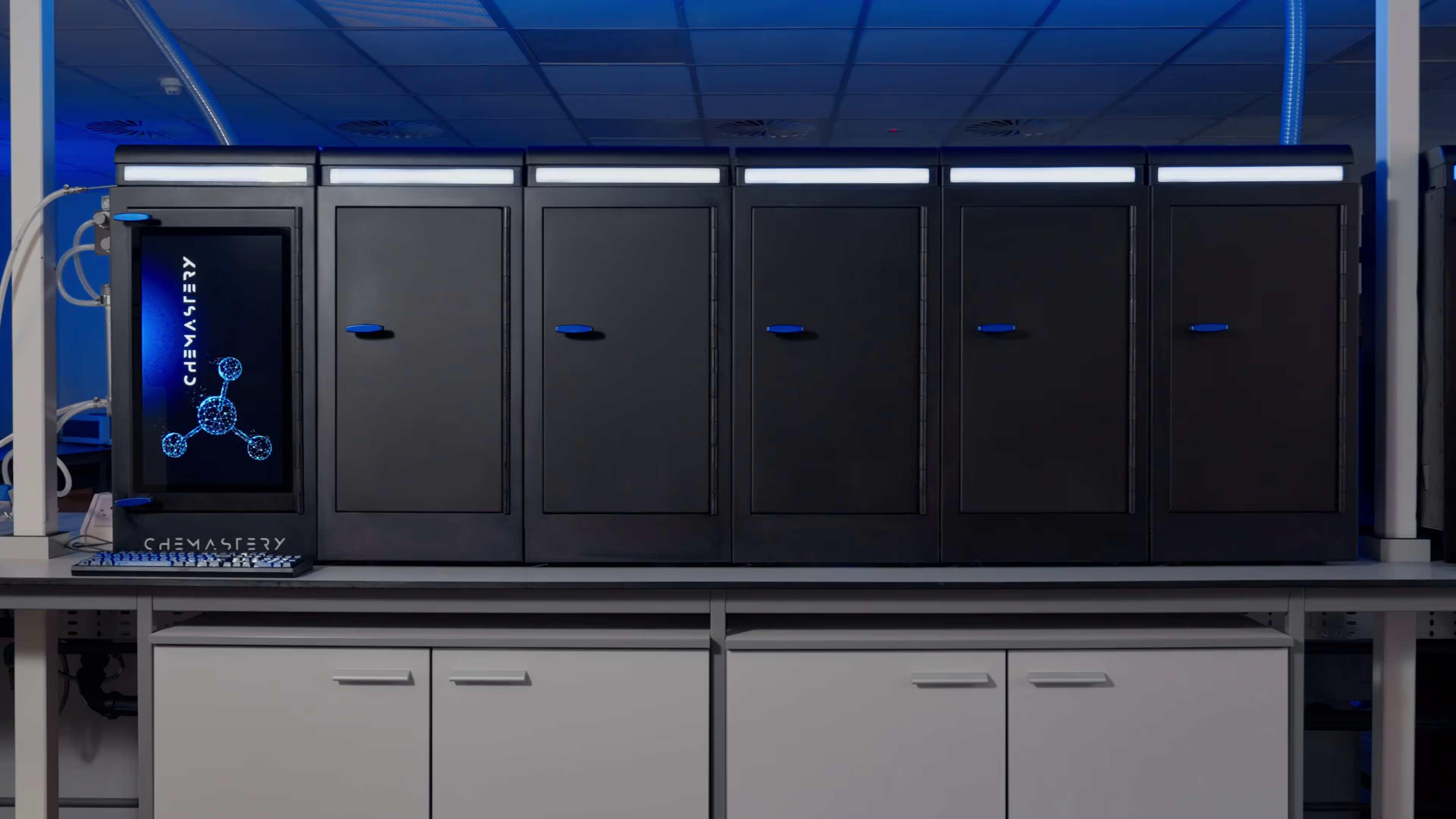
Meet CheMastery Gen 4 Your chemistry agnostic automation platform
CheMastery's Platform standardises and automates up to 90% of chemical processes, boosting efficiency and reproducibility across diverse applications, for on-site, on-demand R&D and manufacture.
Automation should be for everyone.
Small, medium and large businesses alike.
We believe that R&D and Process Chemistry Scale-up shouldn't require translation or change in proceses, they should be inherently the same.
We believe that science, businesses and society alike will benefit from upskilled scientists that will generate more research, more materials and technology, faster and cheaper.
And we are passionate about everyone being able to access and afford technology.
Whether you're a two-person research team or a global chemistry operation, whether you are in drug discovery or superconductors, the platform adapts to your needs, not the other way around.
The future of chemistry is not manual
For decades, laboratory work has relied on manual practices that are often disconnected from commercial manufacturing processes.
At CheMastery, we believe that research and manufacture should operate as a unified system, built on shared principles of standardisation, monitoring, and automation.
The modern chemistry laboratory is standardised and fully automated.
90%
of organic chemistry workflows the platform can automate from R&D scale to Process scale
<5%
of chemistry labs worldwide currently use Process automation or productivity tools

Research and Insights


CheMastery's Robotic Platform is capable of automating ~90% of chemistry.
Your chemists didn't become scinetists to measure reagents, setup experiment after experiment, or monitor reactions overnight.
Let us show you what they could be working on instead — and how quickly your lab can get there.

Chemistry automation at scale, for labs of every size.
Built so chemists can focus on science, not repetitive tasks.


